Not to disrespect people here but please don’t answer if you’re just looking to say a comment that doesn’t give a good explanation or context. Honestly I’m a bit tired of responses like “cause they’re corrupt” or “because they’re fascists”.
I’m hoping someone with experience in law enforcement or law can chime in and show what the actual laws are and why they could be skirting things. What ROE Ice agents might have. I’m also looking at why I don’t see any large law societies bringing these violations if there are any to the courts. I remember years ago there were entire law firms with staff dedicated to areas like this. Why is that not happening today?
Where art thou 2nd amendment gun lovers who prepared themselves for such a time as this?
They’re applauding ICE, and licking boots
Mostly celebrating, and some are telling themselves it isn’t time yet.
It’s kind of a crazy take because I know you’re joking but the implication is that the left really has no power to do anything. If the roles were reversed they absolutely would not stand for any of this
The rule of law has collapsed.
It is like the scene in Mars Attack! when the alien is running around with the language translator repeating “WE COME IN PEACE” while disintegrating humans left and right with their space pistols.
They will say whatever they have to while physically doing whatever they want.
Until we stop THEM ALL
Welcome to fascism, where the rules are made up and the crimes don’t matter (unless your enemies do them, then they really really matter).
Because they’re corrupt fascists. That’s it. That’s the totality of it. No one’s going to prosecute them and if they do, it’s gonna get overturned
A question wrongly asked
The increasing militarization of police, and their use of “less than lethal” weapons including rubber bullets and CS gas is one of the things that was heavily discussed by the mainstream after the death of George Floyd. So was the tactics used by police, like ketteling peaceful protesters. But it was a problem before Rodney king was murdered too.
There has been a long buildup of Americans losing their rights to protest and freely express themselves even before the 9/11 attacks and Bush declaring a “war on terror” or Regan declaring a “war on Drugs”. Both of which were really just ways to militarize police forces against the communities they were supposed to serve.
Remember the whole, “Are you or have you ever been a Communist?” time of American history. You weren’t allowed to freely express yourself as an American then either.
Really, it could be argued that our “inalienable rights” were just some gentlemen’s agreement that were never really ours, and many actively got punished and even murdered for exercising those rights.
Really, to answer your question, I don’t think anyone alive today ever experienced a time where it was ok to majorly disagree with the American government. And after decades of letting police do really whatever they wanted and giving them military equipment, no one really thinks this is illegal because this is the precedent.
The ice Gestapo doesn’t follow laws
Honestly love the first amendment in the US. That video is gas!
They are “allowed” because their actions no longer have consequences. None.
So I’ve had a bit of experience with the law in a state I don’t keep up with anymore, but let me see if I can paint you the picture of the way the laws intersect.
In texas, there is a specific chapter of the penal code that deals with use of force. The first thing to take note of is that line about “justification” under the chapter being a defense to prosecution. You’ll need to go read a portion of chapter 2 to understand that in full, but suffice it to say a prosecutor could still charge you, and a peace officer could still arrest you, even if the terms for ‘defense’ are met.
Returning to the penal code, 9.51 talks about law enforcement (which is defined in the code of criminal procedure, which we’ll get to in a moment, and which federal law enforcement is also defined) and their authority. If you read it carefully, it basically says they can use whatever force they want to. The qualifier, in 9.51(a), about the actor needing reasonable belief that the force is warranted, lets law enforcement get away with just about everything. There is further clarification on deadly force at 9.51©, which again talks about ‘reasonable belief,’ and on “less-lethal” weaponry at 9.55. The two qualifiers on 9.55 are reasonable belief (it’ll come up again and again in laws relating to use of force) and using it per ‘training.’
Now, if you recall from your internet awareness (which I hope you have), you’ll probably have heard about controversies concerning law enforcement training. ‘Killology’ is the famous one, but every department will have some form of training for all of their tools on the belt, and most of it boils down to “use if if you think you need it” which translates to ‘if they resist and you don’t want to wrestle.’ Every department will have a policy regarding their use, and usually there will be some form of restriction (like don’t use the taser as a cattle prod, which is often ignored) and judicious use of the term ‘reasonable belief.’ Yes, that means that basically departments just throw everything on an officer’s judgement in the moment, because the two requirements in the law simply become one.
Let’s switch gears for just a moment to put some context on officer behavior. Arrests are laid out in the code of criminal procedure, chapters 14 and 15. Fourteen is pretty basic, saying that an officer can arrest for things he witnesses (14.01), and is authorized all measures that could be taken if the arrest was for a warrant (14.05). The rest adds to it, but isn’t important in this case. Fifteen gives us more information (15.24), where it says all reasonable means and force are permitted. It also says you can’t use greater force than necessary, but don’t worry about that, cops don’t worry about it either. I’ll have some comments after the main points.
There are two more bits to hash out. We’ve talked (very briefly) about use of force in arrests, and those statutes touched on searches (which is mildly more difficult, mostly because we’d have to go into case law where searches really get hammered out), but we haven’t talked about ‘defense’ of person or property. Law enforcement has their own rules for arrests and certain actions like traffic stops, but they have the same laws for defending against assault/damage (except where courts have let things proceed differently, which you’ll have to understand is a weird thing where laws are shaped in court as much as in the legislature), so that brings us to 9.31 and 9.41 of the penal code. I’m sort of getting weary of quoting, so I’m going to paraphrase these sections quickly. You can stop someone from hurting someone else, and kill them to prevent them killing someone else, if you have a reasonable belief about it. You can stop someone from taking stuff, or damaging stuff, if you have a reasonable belief about it. You can also kill to prevent certain crimes against property, if you have a reasonable belief.
So now we can answer your main question: how are they allowed to, or how are they skirting the laws? It’s because they’re not skirting the laws. Almost every department policy can be summarized as throwing things back to having a ‘reasonable belief.’ Reasonable belief is the great wall of china that every complaint and investigation about law enforcement must crest… and it’s a difficult barrier to overcome. This is because reasonable belief is going to be, one, in the mind of any law enforcement member who is thinking about whether another member’s actions were criminal. If the investigating member can put themselves in the shoes of the other and even for a split second imagine doing the same thing, that investigation is going to die. Reasonable belief, two, is then going to be argued about in the prosecutor’s office, where they generally want a decent working relationship with police agencies, and, three, in court, where we’ve seen plenty of actions die in the grand jury and jury box. Ice isn’t ‘getting away’ with their outrages so much as simply doing what every other law enforcement agency does. The only difference is that they are blatantly violating the one area where the courts (typically, before now) have been willing to ensure law enforcement follows the law: having probable cause to arrest (so, more than ‘just’ being darker skinned), and thus not violating civil rights. Seeing as we’ve just had the supreme court throw out that shit, we’re fucked in that regard.
To return to a few things that I mentioned and wanted to talk about more (mostly because they’re not directly relevant to your question of ‘how?’ but are things to know in the general sense, and a big warning besides): justification/defense, and using force against peace officers. If you remember, I was paraphrasing the second chapter of the penal code where it says a prosecutor doesn’t have to deny the defense in their charging statement. However, in practice it is almost always done. There’s a giant book out there for prosecutors that has example charging statements for just about every crime ever, and the majority of them are simple recitations of a crime’s major points, and typically refute any possible defense claims. This means prosecutors, and the officers who use the very helpful example statements, will very, very rarely make an arrest and press charges if the defense can’t be refuted in the charging statement. Note that recent case in texas where someone shot a kid for ding-dong-ditching, and he wasn’t arrested immediately (I might be misremembering this case and another one where any normal person would be screaming "Why didn’t they arrest him?! Texas seems to have a lot of those). This is a ‘privilege’ that is extended much more often to other law enforcement fucks.
Now we come to where most of us need to be very careful. 9.31© of the penal code talks about resisting peace officers. America has had some famous examples of that, such as the military member who shot back when a no-knock warrant was executed on the wrong house. The issue is that each officer gets judged by their reasonable belief. Remember, everything comes back to reasonable belief. If an officer tells you that you are under arrest, and you are completely compliant, if the officer suddenly pulled out their taser and begins using it on you, I (and hopefully a jury) would say you are completely justified in resisting. But what happens if you knock the taser out of the officer’s hand? Do you then get to run away from said officer? What if another officer pulls up and sees you swinging your fists/feet/body at the other officer who has already deployed a taser? Most departments preach about having a lethal weapon covering a situation if a taser is being deployed. That means this second officer is going to be primed to shoot (and their lawyers can write up that 'reasonable belief) faster than I could find the statutes website for this post). Now what if the second officer was two or three officers down in the little police red-rover line they like to pull, and didn’t see whether you did something to make a taser reasonable? What if it wasn’t a taser, but a gun, and you responded with your own? It’s all bullshit, but it’s shit that will get you killed and the police a pat on the back from their asshole colleagues.
…do these instant-ice fucks have qualified immunity?
Likely. They’re considered law enforcement, and just like the state/county/city police you commonly hear about it with, they have policies/procedures they’re supposed to follow.
fffffffffffffffffffffffffffffffffffffffffuuuuuu
Sorry to throw salt on the wound.
deleted by creator
This is the answer. ICE is operating by the same rules the Ferguson police were during the 2014 riots, and the George Floyd protests in 2020. They can do whatever the my want up to and including break your door down in the middle of the night and shoot you while you sleep like they did to Breyonna Taylor.
The democracy is there to waste your time. If your step out of line you will be treated like you’ve been seeing them treat black and latino communities this whole time. Why did you allow them to do that even if it was legal? A question that no doubt affronts you.
*hispanic.
ALLOW them? Lol.
Yes, like German citizens during the holocaust allowed it. Like you just sat on your ass throughout Israel’s genocidal campaign and continued to reproduce the political system and lifestyle that enables neocolonialism. I would estimate 80% of the US public is totally complicit. This is obvious.
You’re still salty from your other thread, I see. That’s a mute.
Removed by mod
What if we just coordinate better and became a bit more strategic and forward thinking.
I mean these people are obsessed with image. They are dependent on the public for that image. We are the public, we have coordinated to make cat videos popular ergo …
deleted by creator
Removed by mod
From watching the video the ROE appears to allow for engagement for crossing the blue line onto federal property or interfering with traffic leaving the compound.
Thank you for being the only person in the thread to answer the question.
That’s something I didn’t actually consider. But should be clearly marked if that’s the case in that area
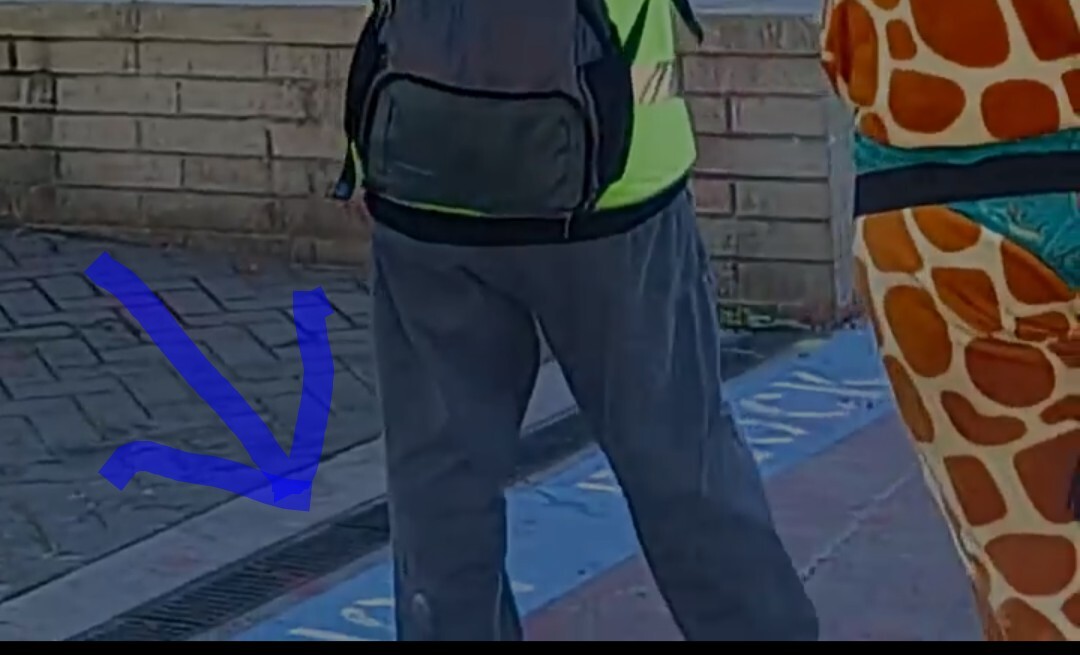
Not sure what it says, but I think you have the closest explanation to why it is allowed. I meant by marked is that there should be something saying “cross the line, get peppered”
Who is going to stop them?
Local police? No jurisdiction.
FBI? The guy running them does cartoons featuring Trump slaying dragons while wearing golden armor?
How can ISE do this? Well the answer is easy. 88 Million people vote for a convicted felony and child molester and another 18 million didn’t vote……
I mean, the local police do have jurisdiction, they just aren’t going to do anything. Federal property is still within a state, and the state has every right to enforce their laws. Go shoot up a federal property, and watch as the local prosecutor and the federal prosecutor fight over who gets to put their name next to your conviction. The other closest analogue to look at is how crimes in an indian reservation can be charged by the reservation authorities, the state, or the feds.
No man … federal property completely negates city and state jurisdiction.
Honestly I’m a bit tired of responses like “cause they’re corrupt” or “because they’re fascists”.
I feel this so much. Not only is it not productive, it short circuits thoughtful discussion that could actually be productive. So much so it makes me suspicious 🤔
But if it’s not wrong, then that is a useful answer. If the people who are committing crimes are a military force that is willing to use force to avoid being held accountable by law… questions that depend on the rule of law being in effect are missing the point. Laws need to be enforced by some kind of superior force to the people being subject to the law. Ideally that force is mutually agreed upon by society through some political process. Modern democracies are supposed to base that legitimacy on democratic will restrained by constitutional limitations. But clearly that doesn’t strictly need to be the case for a state to operate. The most base level of political legitimacy for the use of force to govern is the mere unwillingness of the population to use their own violence to counter it. If things ever got bad enough, the thing that keeps that in check is ultimately organized resistance and revolution.
Going back to liberal democracy though, even with all of our theoretical restrictions on power, ultimately all of that only works based on some combination of the government believing in and choosing to follow those principles and if all else fails… revolution. Just think about how historically significant the first ever peaceful transition of power was. The people with all the guns just decided not to use them to keep their power. Think about how crazy it is that some of the people in the government wanted George Washington to become king and he was just like “Nah. Pass. That’s not how we’re gonna do things anymore.”
If they decided otherwise… what was a judge going to do about that? Write a strongly worded opinion paper? Then what? In order for anything to happen either the gov needed agree or enough other people with guns would have to organize to do something about it. Even if you have some police force to represent the courts independent of the main government, that police force needs to be full of people who agree with the rule of law and they have to be strong enough to enforce that court decision.
So getting back to our situation… if the main government and the military and police under its direct control has decided that the rule of law isn’t important to it, then even if you can point to the laws they’re breaking and get the courts to rule against them… you need to answer the question of who is going to make those court decisions a reality. If it isn’t going to be ICE, the US Military, or any of the other organizations engaged in the illegal activity, then it needs to be someone else and at that point it’s a war and the laws don’t really matter anymore anyway.
So that’s the decision tree for this question. If you think the government isn’t entirely run by fascists, then we can discuss the legal question. If your answer is that the government is corrupt and fascist, then answering the legal question is producing answers that are inherently incorrect and misleading. If you do genuinely believe the opposite, then yes, just giving the fascist answer is incorrect and misleading. In either case, the path we go down, if incorrect, leads us away from the more productive conversation. But the question of which of these two answers is the correct starting point for the interesting and necessary discussion.
While you’re discussing it they just kidnapped another family.
deleted by creator